
Com4Dev, which grew out of Communication for Development (C4D), now combines a variety of professions to support and manage cooperation projects, particularly on the international stage.

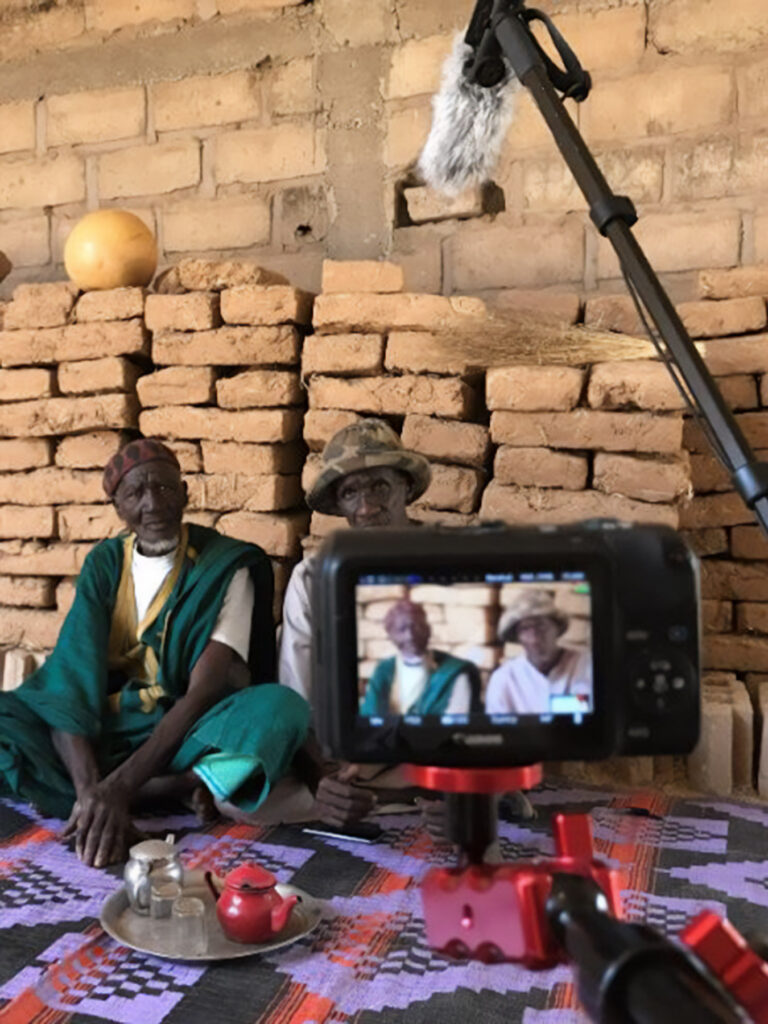
These projects involve various partner organizations, and Com4Dev’s approach is to reinforce their meaning and scope. This approach is based on listening, co-construction and sharing, in order to build appropriate strategies, strengthen team capabilities and encourage collective learning.
By contributing to the development and sharing of knowledge, Com4Dev fosters the emergence or reinforcement of the target groups’ ability to act, as well as their appropriation of the results and mechanisms for change that they have put in place during the projects.
In this way, the association seeks to make initiatives more sustainable, more useful and better connected to their stakeholders.
To design and support high-impact projects
Com4Dev’s core business is the engineering of cooperative projects, from conception to implementation. Its members have proven multidisciplinary expertise in this field.
Our contribution aims to reinforce the impact of projects by promoting the appropriation of results by stakeholders. To do this, we integrate the logic of change from the outset and throughout projects, fully involving all parties in knowledge management. We believe that sharing knowledge and understanding the mechanisms of change gives stakeholders a greater capacity to act, and encourages the dissemination of positive factors.
Com4Dev’s actions take into account local knowledge and the logic of target groups.
We contribute to or pay for :
Ideation processes
Context analysis
Project formulation
The search for financing
Coordinating implementation
To set common objectives, ensure ownership and dissemination
Com4Dev bases all its actions on strategic approaches developed jointly with stakeholders. It also provides this service to third parties for project formulation. The co-construction of strategies covers both objectives and expected long-term results, and the processes for achieving them, followed by action plans. It concerns an organization in all its internal and external dimensions, a program, a particular aspect such as communication for development, organizational knowledge management or global or specific project capitalization.
Such an approach enables us to define a better coordination of partners throughout the project, with a shared vision and, above all, trajectories of change. The latter include pauses and reflections that enable us to take stock of the progress made, the effects of actions and the driving forces behind the changes engendered. By feeding into the monitoring-evaluation and intermediate learning processes, they promote project management by involving all stakeholders in decisions to adjust the action to pursue objectives more effectively. These stages are also crucial to the capitalization and formation of shared knowledge, which contributes to the multiplication and dissemination of results.
Typical co-construction stages (ex-ante) :
Diagnosis phase
Co-construction workshop(s)
Validation of strategy and impact trajectories
Formulation of recommendations for
To share lessons learned and understand changes
Com4Dev has made capitalization one of its core businesses. Its approach aims to consolidate or bring out shared knowledge for a group of players, encourage their appropriation and reinforce the impact of projects by enabling them to draw detailed learning from their actions and results.
Capitalization can take place at the end of the project (ex-post) or during the various stages of a project. Ideally, a knowledge management strategy incorporating capitalization should be drawn up at the same time as the project.
Internal capitalization helps us to understand the mechanisms involved in the project and its implementation: objectives, actions, management, results, and to draw lessons concerning the role and involvement of the various parties involved, successes and failures.
External capitalization aims to identify and measure the changes to which projects have contributed, as well as the often invisible mechanisms that have enabled these changes. It aims to provide food for thought on the effects at the level of individuals, organizations and the systems in which they are embedded, and thus on the impact of projects.
Capitalization and its dissemination can also be used to vary narratives and sketch out desirable futures.
We offer
Capitalization training
Capitalization strategies
Capitalization reports
Various capitalization media including videos, webdocumentaries, infographics, advocacy documents... depending on the target audience
To share knowledge and learn collectively
Com4Dev’s cooperative actions, particularly in transnational projects, are underpinned by an ongoing partnership approach. The organization acts at all levels of the knowledge management chain: from the emergence and creation of knowledge, to its sharing and pooling.
This approach is only possible with a strategic vision of knowledge management, and a detailed knowledge of target audiences, so that sharing can be fully adapted. This often calls for media and communication diagnostics to adapt dissemination tools to those for whom the knowledge is intended. Another important component is the valorization of local knowledge, the starting point for all strategic development.
To disseminate and share knowledge, Com4Dev sets up, pilots and participates in communities of reflection and action, within which it contributes to the creation of development resource centers, the organization of peer-to-peer learning schemes and the design of tools, most often digital but not exclusively.
Knowledge sharing takes different forms depending on the target audience. For example
Knowledge sharing takes different forms depending on the target audience, for example
Organization of international conferences and events
Setting up exhibitions
Designing awareness campaigns
Design and production of publications, multimedia and multi-media tools
Production of capitalization documents and films
Empowering people to act
Com4Dev offers training courses throughout the year on the know-how and methodologies applied in its projects. Training courses are generally given on an in-house basis, in order to collectively reinforce the capacities of project teams or strategic groups. Inter-organizational training is also possible, bringing together project managers and field agents from several organizations.
These training courses are organized on an à la carte basis and focus on project engineering and capitalization. They are designed to provide concrete case studies and feedback from proven experience. Com4Dev also works with training organizations, teaching a module on Communication for Development within the Master ADEV program at Montpellier’s Paul Valéry University.
Pedagogical engineering includes :
Analysis of training needs
Designing adapted modules
The constant link between theory and practical workshops on projects set up by training participants.
Sharing feedback from the field
Assessment of prior learning
To facilitate dialogue and cooperation dynamics
Com4Dev has developed proven expertise in organizing international events, both in France and in other countries. It is thus able to organize such events as part of its own projects, but also operates in partnership with structures and organizations to which it brings the international component. Aside from the specific themes of its events, Com4Dev’s aim is to contribute to changing narratives on international cooperation, taking account of diversity and in the spirit of popular education.
In particular, it is a key partner of Halle Tropisme and Coopérative Illusions & Macadam in Montpellier, with whom it takes part in the organization and management of events such as the Biennale Europe-Afrique de Montpellier, both as part of the general program and through parallel events.
Our approach is based on our skills and experience in project engineering. We contribute to..:
formulation
implementation by providing contacts
identifying and assisting the participation of international experts and guests from third countries
animation of complete sequences including facilitation of panels and debates
general communications
capitalize on the conclusions of the various sequences in which we are involved